Tools in use
Tools we build to support research, teaching, and the work around them.
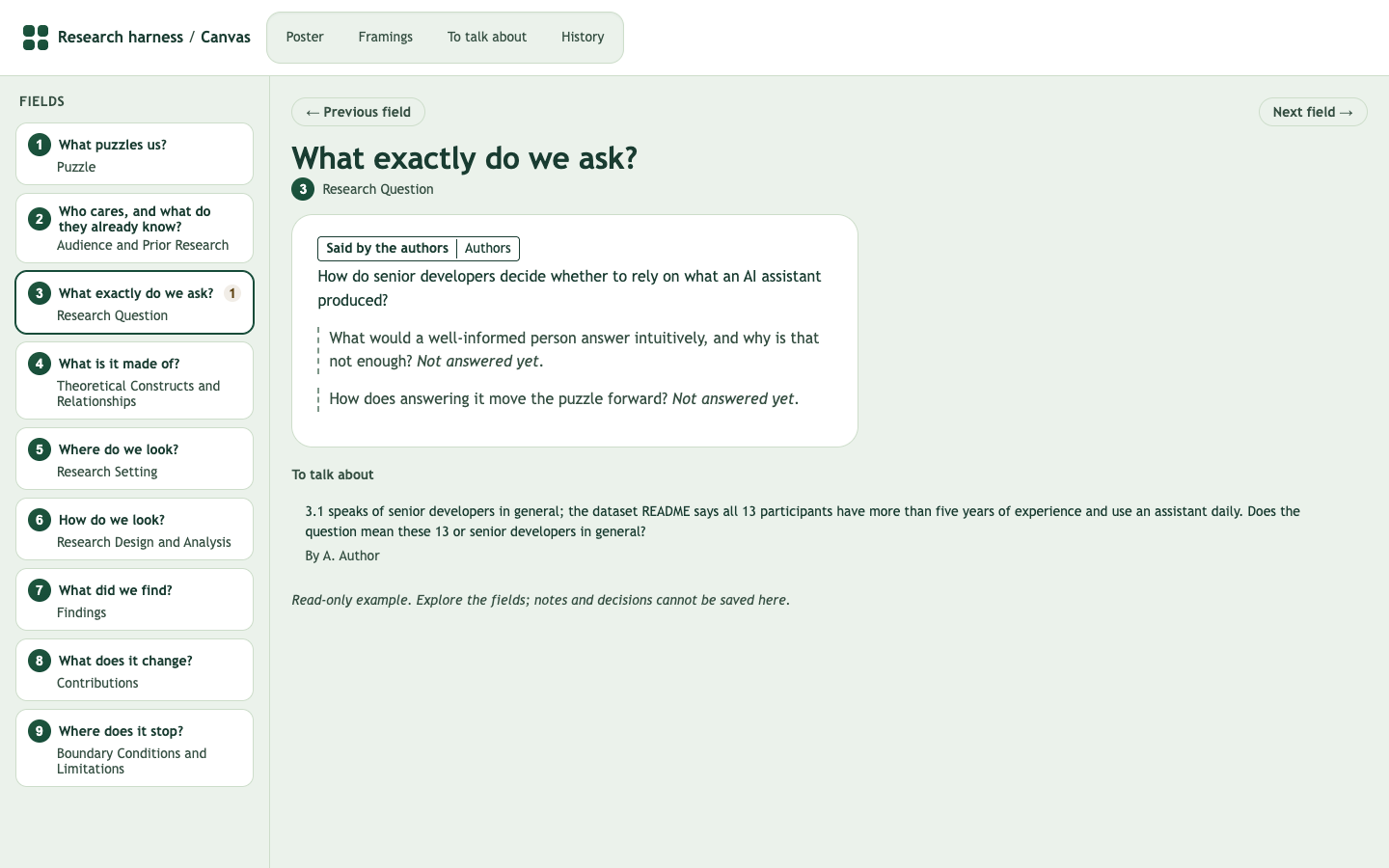
Placet
Keeping the researcher’s decisions visible.
Placet is a desktop app for paper projects in which agents propose and only the researcher accepts. Each acceptance is logged in the researcher’s own words, so coauthors can follow what changed and why.
I’m developing Placet and the research-harness plugin it runs on. The desktop app is in testing; the plugin’s code and walkthrough are available on GitHub.
In my research, agents help develop proposals and prepare literature notes. I review the evidence before accepting a change and record why I accepted it. For direct quotations, a check compares the wording with the cited page; deciding whether the source supports the argument remains my job.
InnoCompass
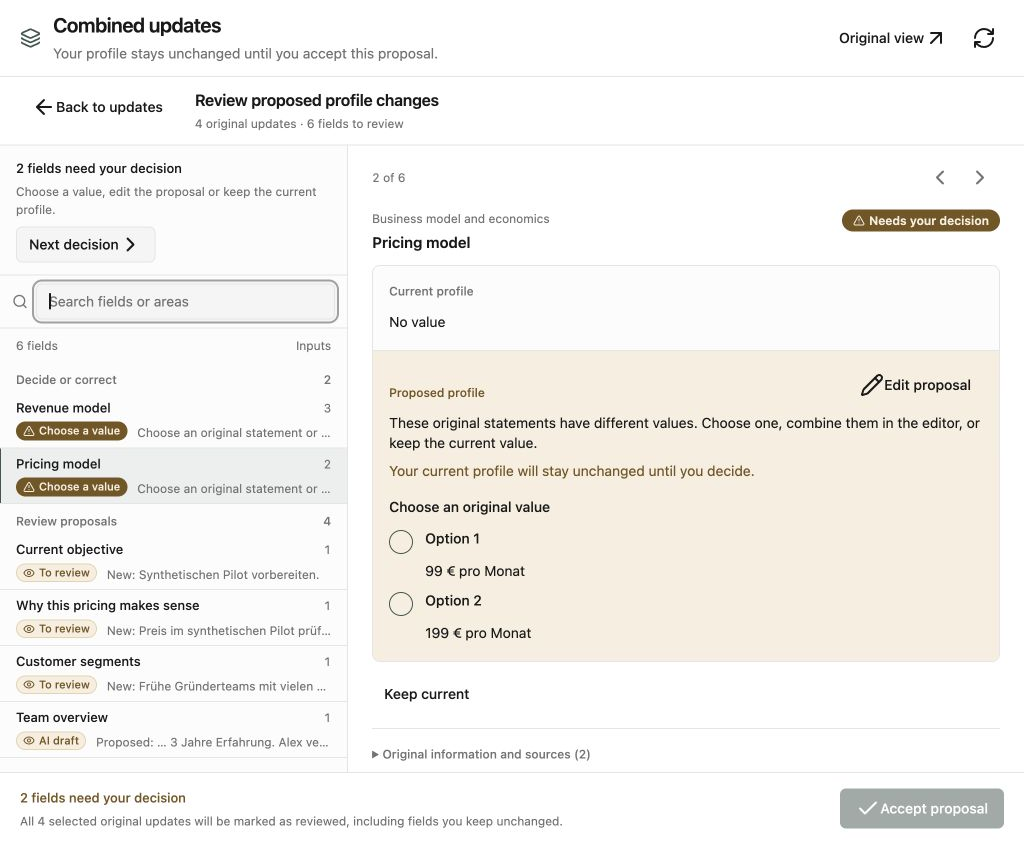
Making a venture’s assumptions available for discussion.
InnoCompass is an AI-based system for early-stage founders that structures how a venture is represented and surfaces the assumptions behind it. It is used in KIT’s coaching formats and doubles as our research instrument.
I lead the project and its research; technical development is led by my doctoral researcher. Our published work asks what AI coaching needs to support founders’ learning and judgment.
KIT LENS
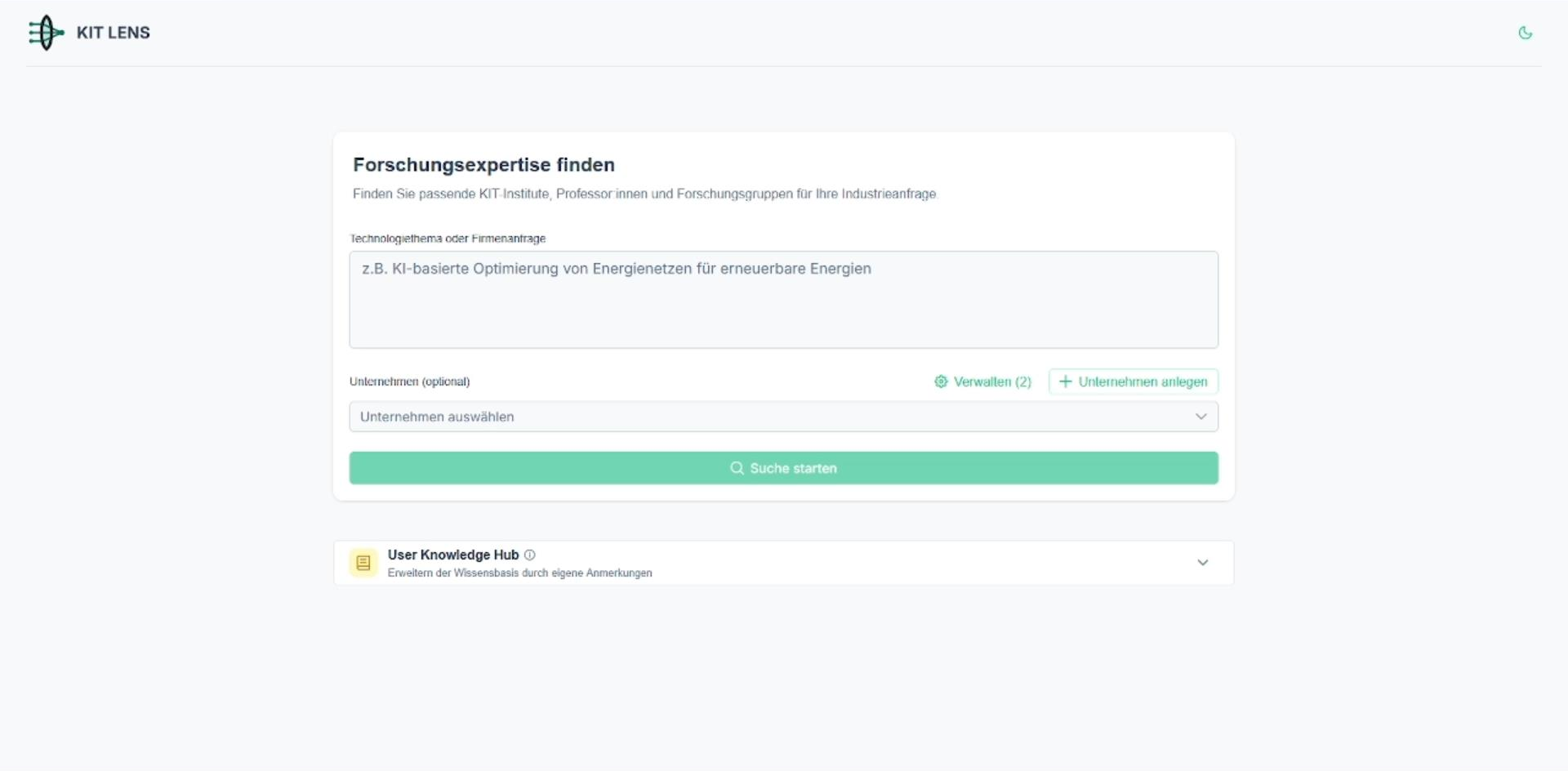
Finding the research expertise behind a practical question.
KIT LENS is an AI-assisted prototype that helps people find relevant researchers and institutes at KIT. It draws on publications and other research material to suggest who might be able to help with an inquiry.
Developed through a master’s thesis in our lab, it was tested in a limited pilot with KIT staff. The aim is to give them a starting point for identifying expertise and deciding whom to contact.
DSI-WI4 Hub
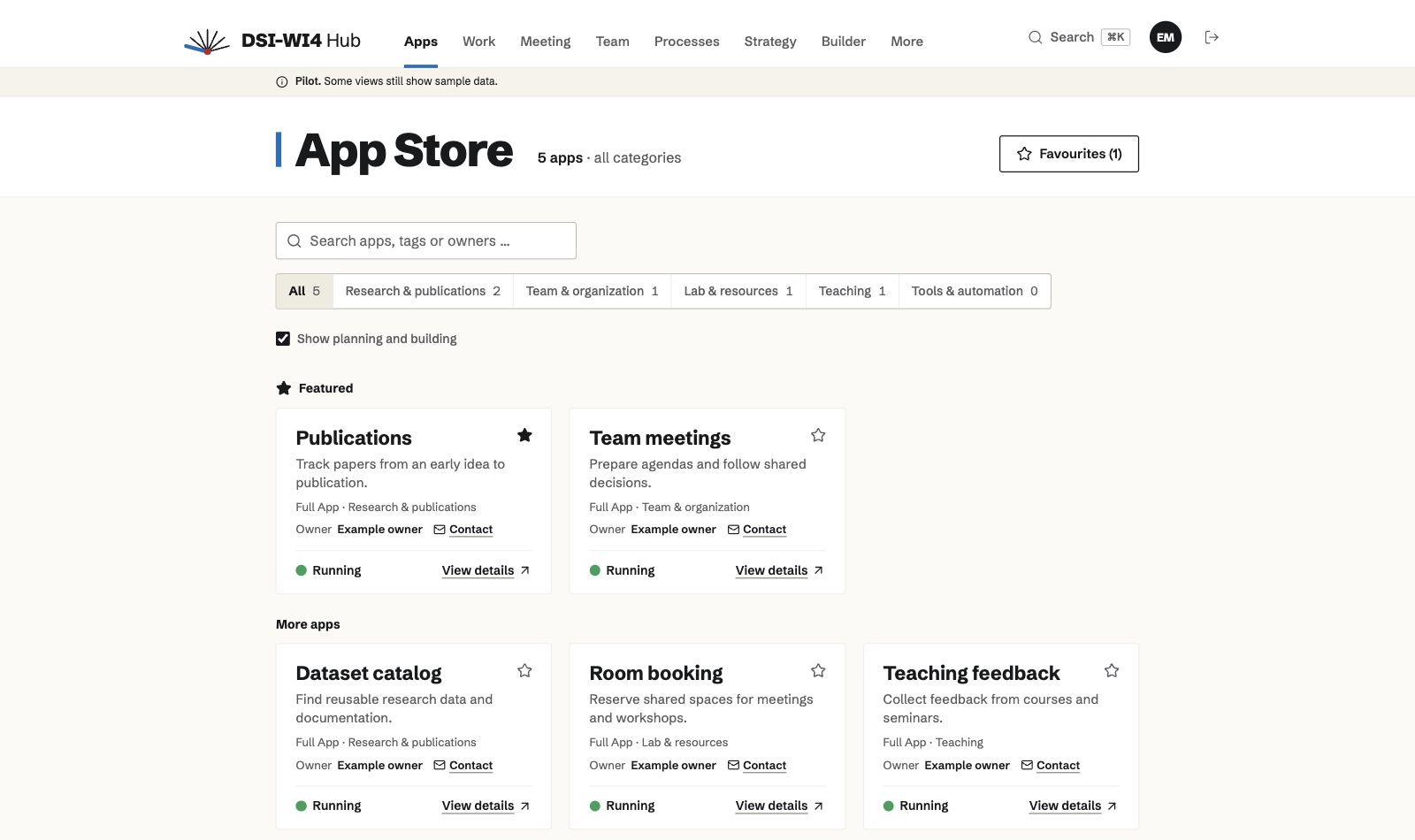
Bringing the work of a research group together.
A research group runs research, teaching, projects, and administration across many tools. I’m building the DSI-WI4 Hub at KIT to connect that work through a shared sign-in and apps for meetings, publications, and internal processes.
The group uses the hub in its everyday work. Access to its apps is managed through the group’s accounts and permissions.